
Dear Friend,
In the past two decades of attempted reform in the aid sector, dozens of recommendations have been published to guide funders on how they should fund in order to achieve the best results and shift the power to local groups—offering multi-year, unrestricted grants, for example, or allowing potential grantees to submit reports in their first language.
But choosing who to fund is just as crucial as funding in the right ways.
Nine months ago, the Roots of Development research team, headed by anthropologist Jessica Hsu and guided by our Research & Advocacy Advisory Committee, set out to answer this question: out of a pool of potential partners, how do funders know which local groups are best positioned to create truly long-term, transformational impact?
Today, we’re excited to announce the publication of “Framework for Funders: How to Identify Local Partners That Are Creating Real Change.”
THE FRAMEWORK
The Framework offers a new way for funders to think about the potential impact that grantees and their projects could have on their community in the long-term, moving past immediate indicators like number of people trained or number of roads built to focus on the collective outcomes of Community Ownership, Social Cohesion, and Trust.
Local groups that, through their projects and processes, strengthen and enhance Community Ownership, Social Cohesion, and Trust, are sowing the seeds for long-term wellbeing in the form of sustainable peace, economic development, and resilience to shocks.
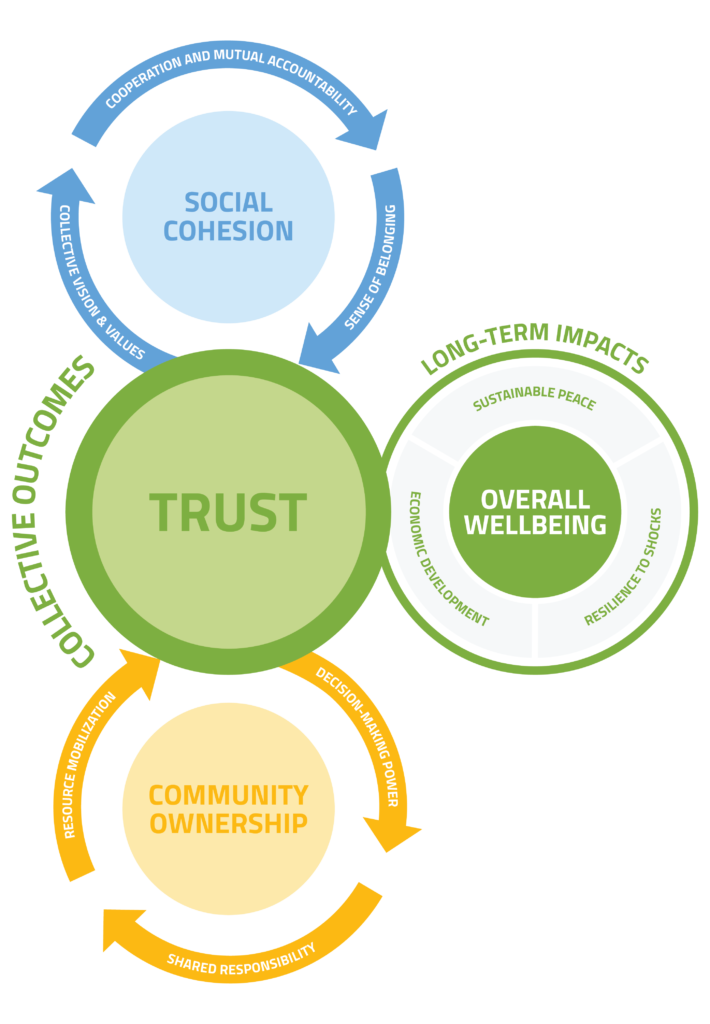
We recommend that funders take these elements into consideration when choosing their grantees to ensure that those they support are contributing to these long-term impacts, rather than unintentionally reinforcing cycles of aid dependency and competition. The Framework includes a list of questions for funders to ask local groups to ascertain how they think about and contribute to these collective outcomes
While this research is applicable globally, it comes out of our 20 years of experience in Haiti, where the aid system has not just failed to make a meaningful impact on wellbeing, but actively undermined public institutions by bypassing local leadership and frayed the social fabric by creating competition and dependency.
Simply funding organizations that are locally led isn’t enough. Even national and local organizations can replicate the short-term, donor-driven approach of the international aid system, prioritizing externally defined projects and timelines over community priorities and leadership.
As the international aid industry enters its second century, we must focus our investments on the local groups that are best positioned to make the kind of real impact we’ve been striving towards for decades—those that are strengthening Social Cohesion, Community Ownership, and Trust and building the pathway to peace, prosperity, and wellbeing.
Take a look at the full framework at rootsofdevelopment.org/fundersframework/.
Sincerely,

Charlie Estes
Managing Director
P.S. If you want to support research like this, as well as our work supporting a local network of Haitian organizations that strengthen community ownership, social cohesion, and trust, please donate at rootsofdevelopment.org/donate.