
Published February 13th, 2026
by Chad Bissonnette
Local Leadership Isn’t Just the “Future of Aid.” It’s What We’ve Been Ignoring All Along.
For at least a decade, the international aid system has pledged to “put communities first.” Yet in many crisis-affected places, including Haiti, communities have always been the first responders.
They mobilize resources, share risk, and innovate solutions long before foreign assistance arrives. In many contexts, communities have organized both formal and informal mutual support networks that respond during crisis.
We should not be inventing, reinforcing, or resetting systems built on the idea of beneficiaries waiting to be reached. These existing, local systems and networks should be central to humanitarian response and play a significant role in long-term development.
In Haiti, mutual aid traditions have sustained communities through political instability, economic hardship, natural disasters, and institutional fragility. Informal savings groups, cooperative labor arrangements, and community leadership structures often provide continuity where more formal, external systems cannot.
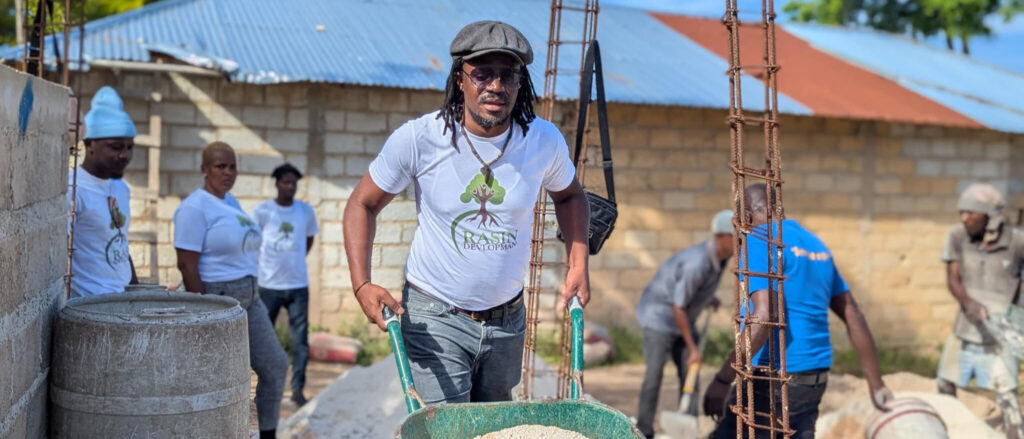
At Roots of Development, our experience consistently shows that when communities define priorities, identify solutions, manage resources, and lead implementation, outcomes are more durable. Community-led systems offer practical advantages: faster response times, deeper contextual understanding, reinforced social cohesion, reduced dependency, and stronger long-term resilience.
External partnerships still matter. Their role, however, must evolve from directing to supporting, and from implementing to bridging (systems, resources, and relationships). This shift is as much about mindset as it is about funding flows.
At the same time, scaling support for mutual aid must be approached carefully. Formalizing community systems too rigidly can erode the qualities that make them effective, including flexibility, trust, and responsiveness.*
If the sector is serious about shifting power, several steps appear unavoidable:
- Recognition that expertise is not synonymous with geography
- Local decision-making authority
- Flexible, multi-year funding
- Prioritizing long-term organizational relationships over short-term projects
- Metrics of success defined with communities, not primarily by or for donors
These are not radical ideas. Implementing them truly and consistently, however, represents a significant deviation from the norm and where real transformation lies.
Roots of Development was recently selected to carry out research and contribute case studies from Haiti to a global report being led by ALNAP (Active Learning Network for Accountability and Performance in Humanitarian Action) and funded by Center for Disaster Philanthropy and Vitol Foundation. ALNAP is an international humanitarian learning network based in London that brings together NGOs, UN agencies, donors, and researchers to improve how aid works, particularly around accountability, effectiveness, and locally led approaches. We’re proud that Haiti will now be part of shaping those global conversations and excited to help move global humanitarian and development efforts toward more community led approaches.